
Understanding Flood Water Extraction
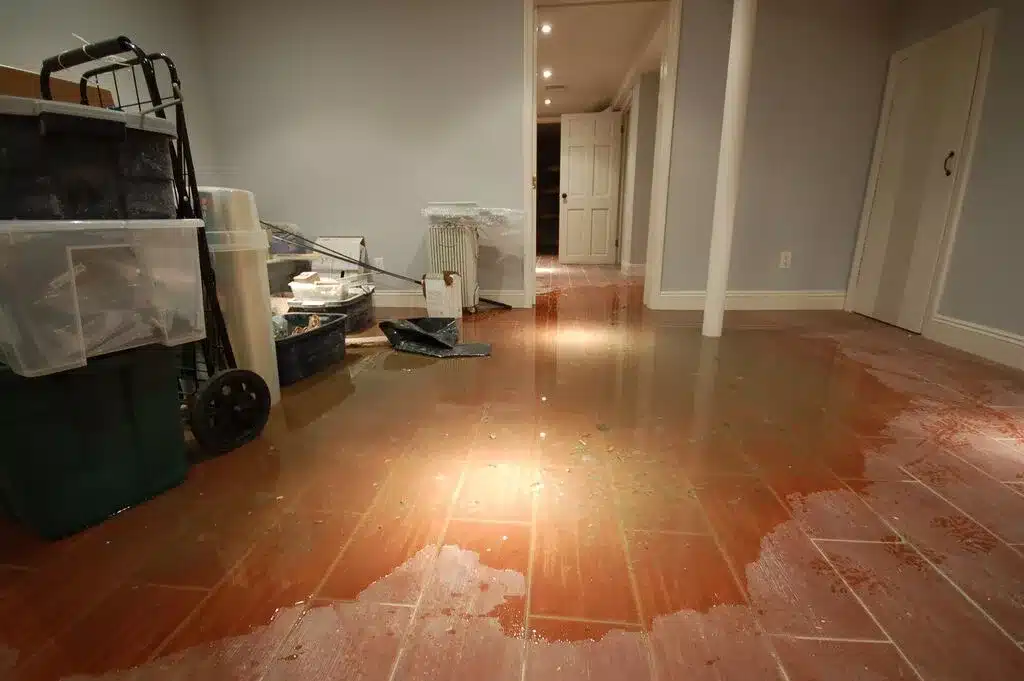
When water invades your home or business, every minute counts. Understanding what flood water extraction is and why speed is critical can mean the difference between a quick recovery and a catastrophic loss. This is the first, most critical step in preventing long-term structural damage and harmful mold growth.
Key Methods and Techniques for Removing Flood Water
The right technique depends on the type of water and the extent of the damage. As Carpet and Rug Institute (CRI) Certified experts, we follow industry-best practices established by the IICRC to safely and effectively restore your property. Our approach is not just about removing water; it’s about making the environment safe and clean.
Equipment Used in Water Removal
The difference between a successful restoration and a failed one often comes down to the equipment. Professional-grade equipment removes more water, dries faster, and verifies that the job is complete. We invest in industry-leading technology to ensure your property is returned to a safe, dry state.
What types of equipment are used for flood water extraction?
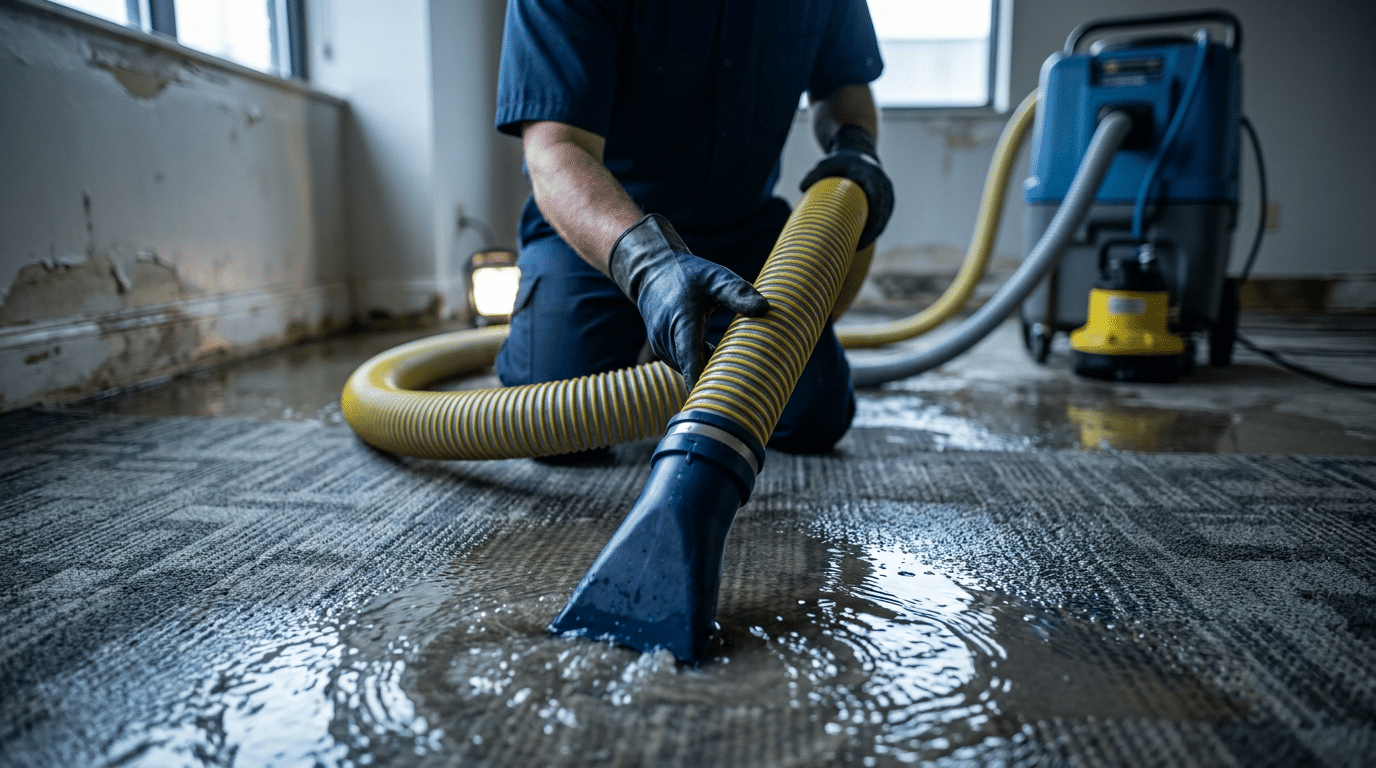
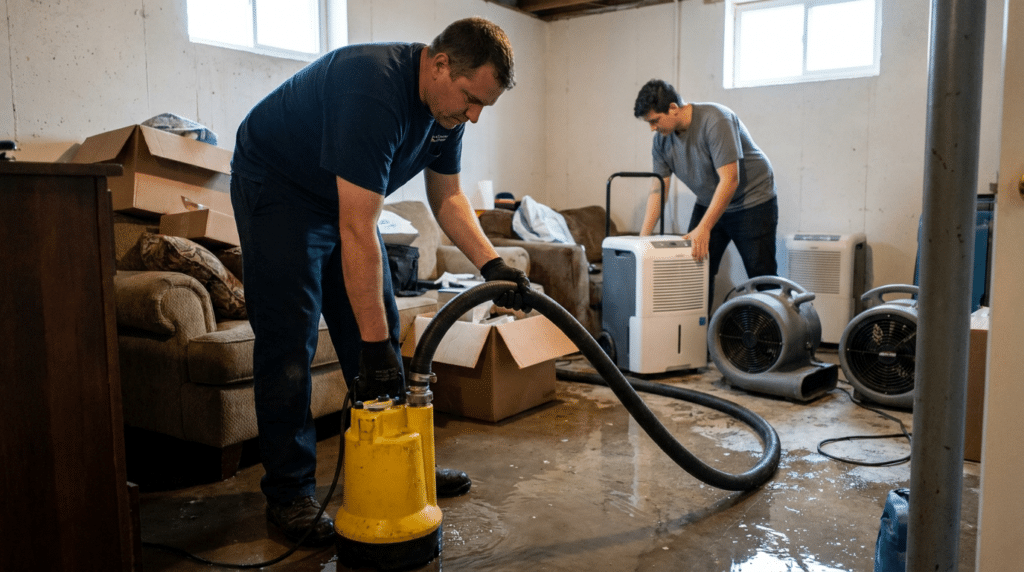
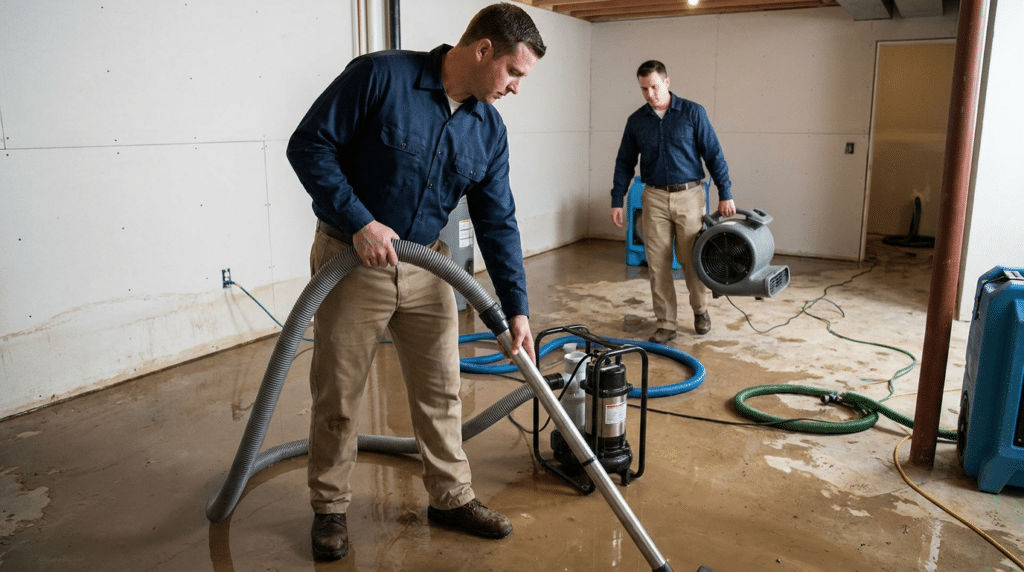
Our arsenal includes a range of specialized tools for any scenario. Submersible pumps are used to quickly remove high levels of standing water. Truck-mounted extraction units handle the bulk of water removal from porous surfaces. We then deploy industrial air movers to circulate air and accelerate evaporation, alongside commercial dehumidifiers that pull gallons of moisture from the air. Finally, we use thermal imaging cameras and moisture meters to find and eliminate hidden water pockets.
Is specialty equipment required for severe flooding?
Yes, absolutely. A few inches of water in a basement can equal thousands of gallons, weighing tons. This is not a job for a shop vacuum. Specialty equipment is not just for speed; it’s for thoroughness. Without professional dehumidification and moisture monitoring, a visually dry area can still harbor enough moisture to cause rot and mold, leading to far more damaging and expensive problems down the line.
The Flood Water Extraction Process: A Step-by-Step Guide
Facing a flood is overwhelming. Knowing what to expect can provide a sense of control. Our process is systematic and designed to get your property back to normal as quickly and safely as possible, with clear communication at every step.
What are the typical steps in flood water extraction and cleanup?
Our process follows a proven, five-step path to recovery.
- Emergency Call & Assessment: Our 24/7 team arrives to assess the damage, identify the source of the water, and develop a plan.
- Water Extraction: We use pumps and extractors to remove all standing water.
- Drying & Dehumidification: Air movers and dehumidifiers are strategically placed to dry the structure.
- Cleaning & Sanitizing: We clean and sanitize affected surfaces and apply antimicrobial treatments to prevent mold.
- Restoration & Repair: Once dry, we can perform the necessary repairs, such as replacing carpet padding or drywall, to fully restore your space.
How long does it take to extract water from a flooded home?
The physical extraction of standing water is often the fastest part, usually taking several hours depending on the volume. However, the complete drying process is much longer. A typical water-damaged home takes 3 to 5 days to dry completely with professional equipment. This timeframe ensures that moisture levels in structural components are returned to a safe, pre-damage state.
What happens after the water is extracted?
Extraction is just the beginning. After the bulk water is gone, the real work of drying begins. We monitor the drying process daily with moisture meters, repositioning equipment as needed to target damp spots. Only when our instruments confirm the structure is dry do we remove the equipment and proceed with cleaning and repairs. Skipping this step is the most common cause of post-flood mold growth.
Addressing Common Concerns After Flood Damage
A flood leaves behind more than just water; it leaves behind uncertainty and worry. Here, we address the most common questions our clients have, based on our years of experience handling water emergencies across Utah.
How do you prevent mold after flood water extraction?
Mold prevention hinges on two things: speed and thoroughness. We prevent mold by responding immediately, extracting water quickly, and implementing rapid structural drying. Applying an EPA-registered antimicrobial agent to affected areas after cleaning provides an additional layer of protection. A dry environment is mold-hostile, which is our ultimate goal.
Can I remove flood water myself, or do I need professionals?
For a small, clean water spill, a DIY approach with a wet/dry vac might be sufficient. However, for anything more than a few square feet or if the water is contaminated (Category 2 or 3), you need professionals. Water hides in wall cavities, under baseboards, and in subflooring. Without the right equipment to find and remove this hidden moisture, you risk serious structural damage and mold that you can’t see until it’s too late. Our clients and private schools consistently hire us because our professional, prompt service gets the job done right the first time.
When should I call a professional flood water extraction company?
You should call the moment you discover significant water damage. The “wait and see” approach does not work with water. The sooner our team is on-site, the more of your property and belongings we can save. We are available 24/7/365 because we know that water emergencies don’t wait for business hours.
Don’t wait. Call our emergency response team now at (801) 618-1390 for immediate help.
Costs and Insurance for Flood Water Extraction
The cost of professional service is a primary concern, and we believe in being transparent. While an emergency service is an unplanned expense, it’s an investment in protecting your largest asset: your property. It’s almost always less expensive than replacement and major mold remediation.
How much does professional flood water extraction cost?
The cost varies widely based on several factors: the amount of water, the size of the affected area, the type of water (clean vs. contaminated), and the equipment and time required. We provide a clear, on-site estimate before any work begins. While we are not a “cheap” service, we provide immense value by preventing tens of thousands of dollars in future repairs. Our friendly staff can provide a free estimate and walk you through the process.
Is flood water extraction covered by insurance?
Coverage depends entirely on your specific policy and the source of the water. Damage from internal sources, such as a burst pipe or appliance failure, is often covered by standard homeowners’ insurance. Damage from external “flooding” (rising groundwater, river overflow) typically requires a separate flood insurance policy. We document everything with photos and moisture readings and can work directly with your insurance adjuster to help streamline your claim.
Seeking Expert Assistance
In a water damage emergency, you need a calm, competent, and fast partner. You need a team with the experience and equipment to take control of the situation and prevent further damage. Father and Son Carpet Cleaning is the partner for homes and businesses throughout Salt Lake County, Utah County, and beyond.
Our Carpet and Rug Institute Certified expert technicians are on call 24/7, ready to respond to your crisis. We stand behind our work with a 100% Satisfaction Guarantee, giving you peace of mind during a stressful time. When water strikes, don’t hesitate.
Call Father and Son Carpet Cleaning at (801) 618-1390 for immediate 24/7 emergency water extraction.

- How to Choose the Right Residential Carpet Cleaning: Complete Guide - August 26, 2026
- Comparison Page: Tile and Grout Cleaning Comparison: Options & Alternatives - June 29, 2026
- Flood Water Extraction FAQ - May 16, 2026